A Bill of Quantities, or BOQ, is one of the most useful tools you can have when planning a construction project. It gives you a clear breakdown of the work, the materials, and the labour needed, all measured and organised in a simple format. With this level of clarity, you can set a realistic budget, compare contractor prices fairly, and avoid many of the surprises that cause projects to run over budget.
This blog explains what a BOQ is, why it matters, and how it helps you save money before and during construction. Whether you’re building a home, renovating, or managing a commercial project, understanding the BOQ will help you make better decisions and keep your project on track.
A Bill of Quantities (BOQ) is a measured list of all materials and labour needed for a construction project. When someone asks, “What is a BOQ in construction?”, the simple answer is: it shows what needs to be built, how much of it is required, and how it will be priced.
A BOQ includes itemised construction costs, measured quantities, clear descriptions, and standard units. It is used in residential, commercial, and civil projects because it gives everyone the same information in the same format. That consistency improves the bill of quantities accuracy and reduces confusion.
Industry professionals rely on BOQs because they make pricing fair and comparable. With a BOQ, contractors price the same quantities, not their own assumptions. This reduces risk, keeps the scope clear, and helps avoid errors before the project starts.
A BOQ lists the measured parts of your project in a clear, structured way. It shows how quantities are measured, what each item includes, and how costs are calculated. This breakdown helps you understand the scope, compare contractor prices, and avoid confusion during construction.
Clients often confuse these three, but each plays a different role in construction planning. A takeoff measures quantities, an estimate predicts the cost, and a BOQ brings everything together into one structured pricing document. Understanding the difference helps you avoid budget errors and compare contractor quotes fairly.
A quantity takeoff is the first step. It focuses only on how quantities are measured. No prices, no totals—just counts and dimensions.
Key Points
An estimate uses the takeoff to predict project cost. It applies rates, labour costs, and material prices.
Key Points
A BOQ takes the takeoff and the estimate and organises them into one clear, itemised document used for tendering and comparison.
Key Points
|
Document |
What It Does |
What It Includes |
What It Doesn’t Include |
|
Takeoff |
Measures quantities |
Counts, lengths, areas |
No pricing, no totals |
|
Estimate |
Predicts cost |
Rates, unit prices, total cost |
Not fully itemised like a BOQ |
|
BOQ |
Full structured breakdown |
Items, quantities, units, rates |
Assumptions or vague descriptions |
A BOQ is built through a clear, step-by-step process that starts with measuring the drawings and ends with a structured pricing document. This workflow relies on industry standards, consistent methods, and accuracy checks to ensure every quantity and description is correct before costing begins.
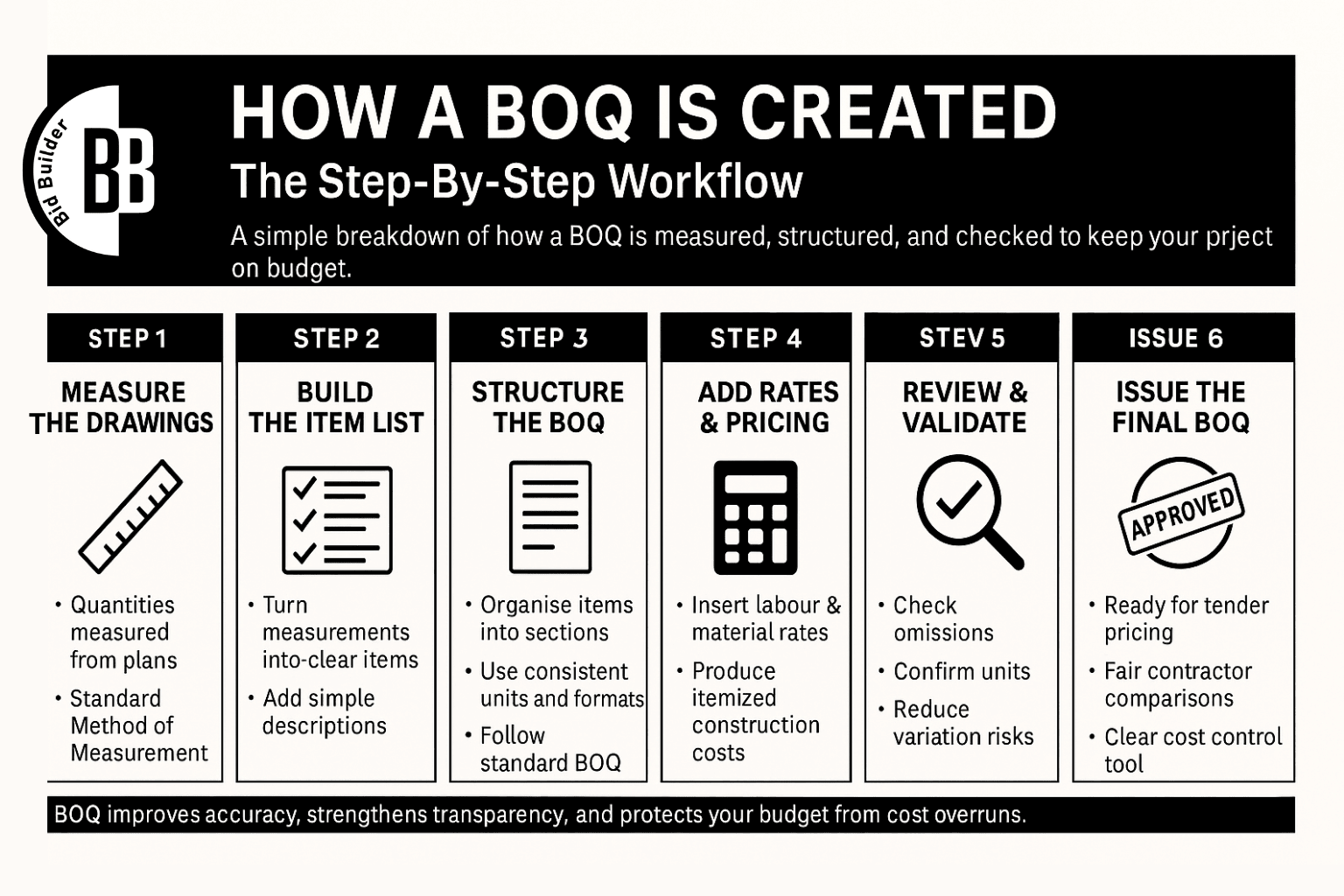
The process begins by measuring the drawings using a Standard Method of Measurement. This ensures how quantities are measured is consistent and accurate. Every length, area, and volume is captured through detailed quantity measurement, creating a reliable base for the BOQ.
Why this step matters:
Once the measurements are complete, they are converted into a clear, itemised list. This step organises the work into detailed scope items with consistent descriptions and formats. It transforms raw quantities into itemised construction costs that contractors can price confidently and without assumptions.
The final stage is a detailed review. The team checks for missing items, inconsistent units, and potential risks. These quality-control steps strengthen bill of quantities accuracy and improve project cost transparency, ensuring the BOQ is reliable before being issued for tender pricing.
Key accuracy checks:
A BOQ brings clarity, structure, and control to your project from day one. It removes guesswork, supports fair pricing, and gives you a clear picture of where your money is going. With an accurate BOQ, decisions become easier, risks reduce, and the entire construction process becomes more predictable.
A BOQ improves the tender process by giving all contractors the same measured quantities to price. This removes assumptions, strengthens BOQ and tender accuracy, and helps you compare bids on equal terms. With consistent information, tender evaluation becomes clearer, and pricing becomes far more reliable.
Why this helps:
A BOQ provides clear, detailed descriptions that align directly with the contract. This reduces scope gaps and prevents disagreements during construction. With improved project cost transparency, both the client and contractor know exactly what is included, lowering the chance of disputes and unexpected claims.
A BOQ gives you a clear breakdown of where money will be spent, making it easier to forecast costs and manage cash flow. It helps you allocate your budget wisely and maintain cost control throughout the project. This level of visibility is essential for reliable planning in construction projects.
A BOQ helps you stay in control of costs by making the scope clear and preventing surprises during construction. It reduces mistakes, avoids hidden charges, and supports better buying decisions. With a clear breakdown of quantities and pricing, you can manage your budget with more confidence and less risk.
Reading a BOQ becomes easier once you know what to look for. It helps you understand how the work is measured, how prices are built, and how contractors use the document to prepare their bids. With a little guidance, you can review a BOQ confidently and avoid common cost mistakes.
A BOQ lists each item with its quantity, unit, and rate, giving you a simple way to understand itemised construction costs. To read it, follow each line from description → quantity → unit → rate → total. This shows how the final price is built and helps you check if the numbers make sense.
A BOQ should be clear and complete. Look out for missing items, vague descriptions, or units that don’t match the drawings. These issues weaken bill of quantities accuracy and can lead to extra costs later. Spotting red flags early improves project cost transparency and reduces risk.
Common warning signs:
A BOQ makes it easier to compare quotes because each contractor prices the same quantities. Focus on differences in rates, allowances, and totals. This helps you see inflated pricing, understand where costs vary, and choose the contractor who offers the best value rather than the lowest number.
A BOQ is useful whenever you want clear costs and a defined scope before starting work. It helps you plan better, compare prices, and avoid surprises. Whether the project is small or large, a BOQ gives you structure and keeps everyone working from the same information.
1. What exactly is a BOQ in construction?
A BOQ is a document that lists all the measured work in a project. It shows quantities, units, and descriptions in a clear format so you can understand what is included and how each part of the job is priced.
2. Do I need a BOQ for a small residential project?
Yes, a BOQ is useful even for smaller projects. It gives you a clear breakdown of the work, helps you compare contractor prices, and reduces confusion during the build.
3. How does a BOQ help prevent budget overruns?
A BOQ helps prevent budget overruns by listing all items upfront. When everything is measured and defined, contractors price the same work, and you avoid missing items that later turn into extra charges.
4. Who prepares the BOQ?
A BOQ is usually prepared by a quantity surveyor or estimator. They measure the drawings, organise the items, and create a document that contractors can price accurately.
5. Is a BOQ different from an estimate?
Yes, a BOQ is different from an estimate. A takeoff measures quantities, an estimate predicts the cost, and a BOQ brings everything together into one structured pricing document.
6. Can a BOQ help me compare contractor quotes?
Yes, a BOQ makes comparing quotes much easier. When contractors price the same quantities, it’s easy to see where their rates differ and whether a price is fair or inflated.
A BOQ gives your project a clear structure from the start. It shows what needs to be built, how much of it is required, and how it should be priced. This level of project cost transparency helps you avoid surprises, reduce the chance of cost overruns, and stay in control of your budget.
A clear BOQ also makes it easier to compare contractors on fair terms. When everyone prices the same scope, you can see real differences in value—not just different numbers. This is why a BOQ is important for anyone planning a build. It improves accuracy, supports better decisions, and shows how a BOQ saves money by preventing mistakes before they happen.